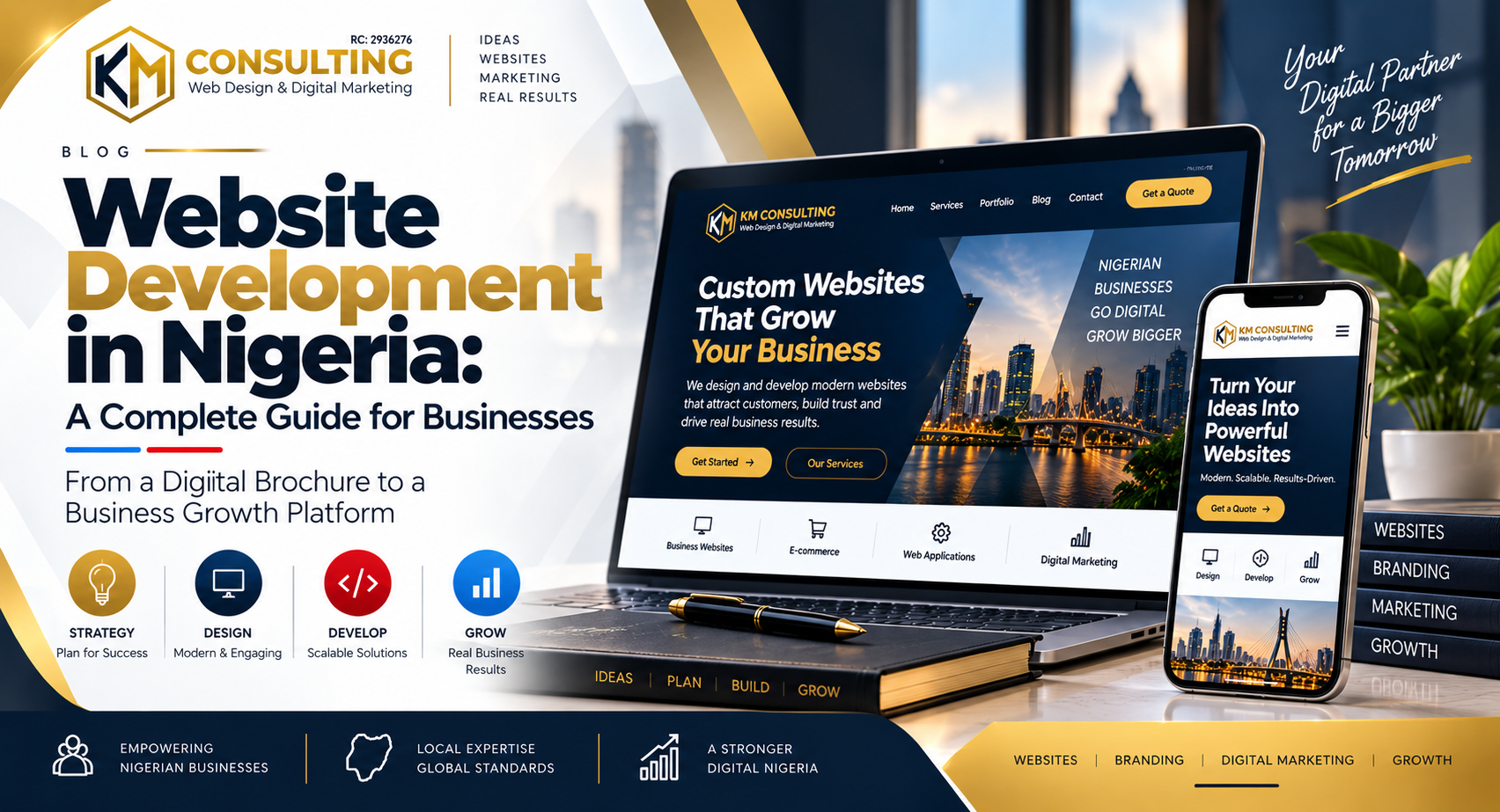
A website is often the first digital asset a potential customer encounters.
But in 2026, a business website should be more than a collection of pages containing a company description and telephone number.
A well-designed website can function as:
- A sales channel
- Lead-generation platform
- Booking system
- E-commerce storefront
- Customer-support channel
- Content platform
- Recruitment tool
- Business information hub
- Digital brand experience
The question is therefore no longer simply:
“Does your business have a website?”
The better question is:
“What is your website supposed to achieve?”
Types of Business Websites
Corporate Website
Suitable for companies that need to establish credibility and communicate their services.
Typical pages include:
- Home
- About
- Services
- Industries
- Portfolio
- Blog
- Contact
E-commerce Website
Designed for businesses selling products online.
It may include:
- Product catalogue
- Search
- Cart
- Checkout
- Payment
- Customer accounts
- Order management
- Inventory
Marketplace
A multi-vendor system involving customers, vendors and administrators.
Web Application
A web application can provide functionality beyond normal informational pages.
Examples include:
- Dashboards
- Booking systems
- Portals
- SaaS products
- Management systems
The Importance of Strategy
Before development begins, a website should have a clear purpose.
For example:
Goal: Generate leads.
Then the website needs:
- Strong service pages
- Clear CTAs
- Contact forms
- WhatsApp integration
- Case studies
- Testimonials
- SEO content
If the goal is e-commerce, the architecture changes.
If the goal is a membership platform, it changes again.
User Experience
Visitors should quickly understand:
Who are you?
What do you offer?
Who do you serve?
Why should they trust you?
What should they do next?
Good UX reduces cognitive friction.
Navigation should be predictable.
Content should be readable.
Buttons should be obvious.
Forms should not be unnecessarily complicated.
The mobile experience should receive serious attention because many users will access the website through smartphones.
Mobile Responsiveness
A website should work properly across:
- Smartphones
- Tablets
- Laptops
- Desktop monitors
Responsive design should not simply mean shrinking desktop content.
The experience should be deliberately designed for smaller screens.
Menus may change.
Content hierarchy may change.
Images may change.
Buttons may need larger touch targets.
CMS and Administration
Businesses often need the ability to update their own websites.
A content management system can allow administrators to manage:
- Blog posts
- Pages
- Images
- Products
- Services
- Team members
- Testimonials
- Events
- Resources
This can significantly reduce dependence on developers for everyday content updates.
SEO
A beautiful website that nobody finds can become an expensive brochure.
SEO should therefore be considered during development.
Important areas include:
- Page titles
- Meta descriptions
- Heading structure
- URLs
- Internal linking
- Image optimisation
- Page speed
- Structured data
- Sitemap
- Search indexing
- Content
Service pages should target relevant commercial search terms naturally.
For example:
Software Development Company Nigeria
is much more commercially meaningful than a generic article about software.
Website Security
Security should also be planned.
Depending on the system, this can include:
- HTTPS
- Secure authentication
- Access controls
- Backups
- Secure forms
- Plugin management
- Server security
- Monitoring
For websites processing customer information or payments, the security requirements become more significant.
Integrations
Modern websites frequently integrate with other systems.
Examples include:
- Payment gateways
- CRM
- Email marketing
- Analytics
- Social media
- Booking systems
- Maps
- ERP systems
- APIs
Integration requirements should be identified before development.
Website Development Cost
The cost can vary significantly.
A basic corporate website may require only a handful of pages.
A larger platform could involve:
- CMS
- Blog
- Resource centre
- Payment
- Membership
- Admin dashboard
- API integrations
- Search
- User accounts
The right budget therefore depends on the scope.
The KM Consulting Approach
At KM Consulting & Tech, website development should be treated as digital product development rather than simply page creation.
The process can include:
Discovery → Strategy → UX → UI → Development → CMS → Integrations → SEO → Testing → Deployment.
This creates a website capable of supporting the business beyond launch.
Final Thoughts
Your website should answer one fundamental question:
What business outcome is this website designed to produce?
If the answer is leads, design for leads.
If the answer is sales, design for sales.
If the answer is bookings, design for bookings.
If the answer is authority, design for credibility.
The strongest websites connect design, technology and business objectives.
A website should not merely represent your business online. It should help your business operate and grow. Contact us for your web design +2347039340610